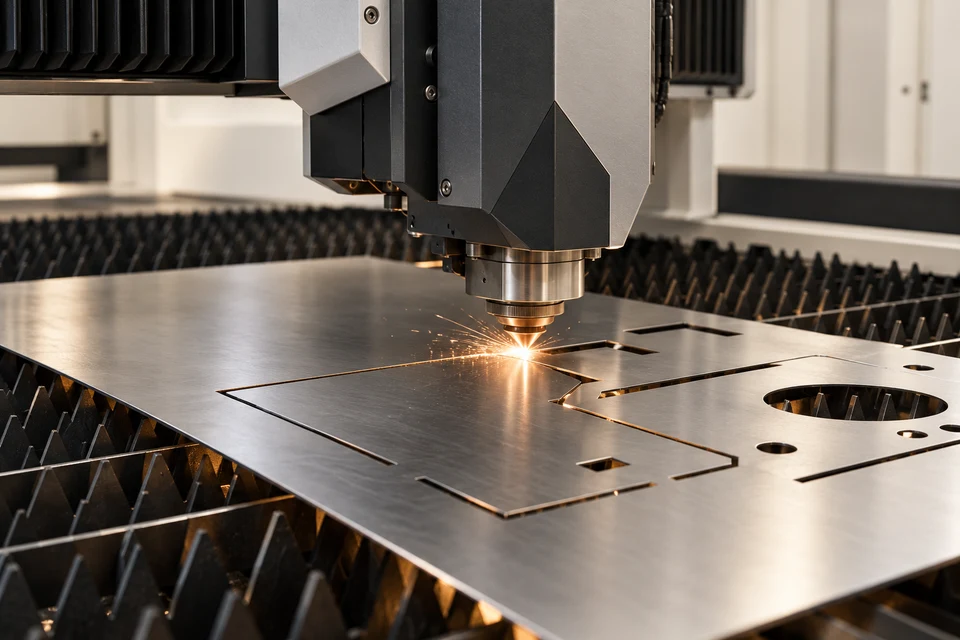
01 / Synthetic example · DEMO
Display-unit panel
A flat part with a described outline and mounting holes.
- Starting point
- Outline, fixing method and number of parts.
- Open question
- Which dimensions matter for assembly?

Guide / DEMO processing directions
Outline, geometry or joint? Organise the purpose and information before discussing production. Sample materials and parameters do not confirm a factory's capabilities.
01 / Short guide
The selection shows a direction for discussion and information to prepare. It works locally using visible rules.
Choose a need. We will show where to start the description.
The rule is explicit: flat outline → cutting; three-dimensional shape → bending; assembly → a discussion of joining. “I do not know yet” leaves the direction open. Material and documentation status change the information list; they are not a technical assessment. AI is disabled.
01 / Flat outline
Start with the shape, material type and number of parts. This example shows how to organise information before speaking to a manufacturer.
Are the outline and all important part features clearly described?
Material, documentation, scope and parameters need a separate agreement.
02 / Three-dimensional shape
Separate the finished shape from information about planned bends. The final method and feasibility require a drawing review.
Are the target shape and features important for assembly described?
Material, documentation, scope and parameters need a separate agreement.
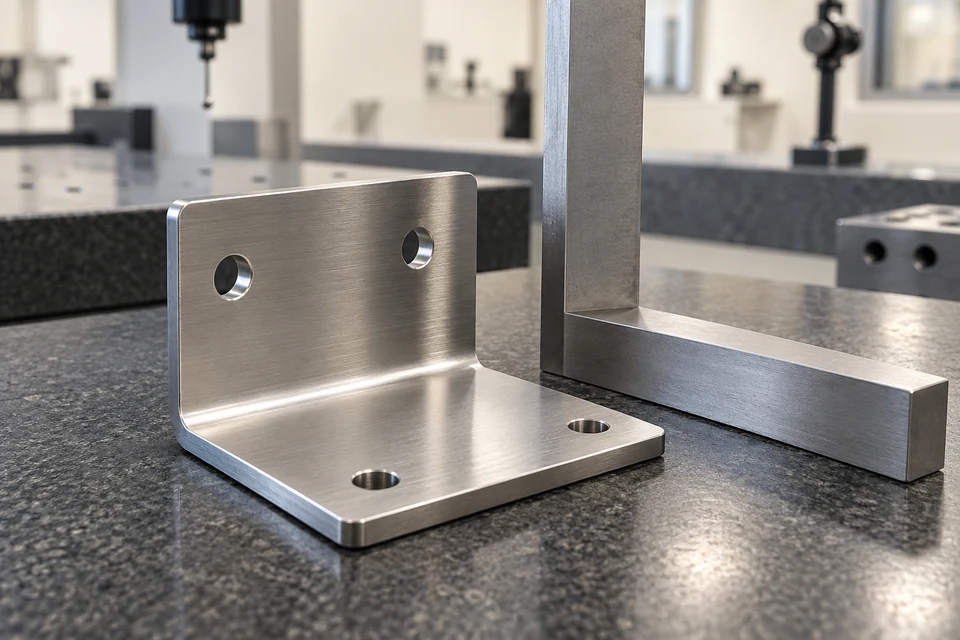
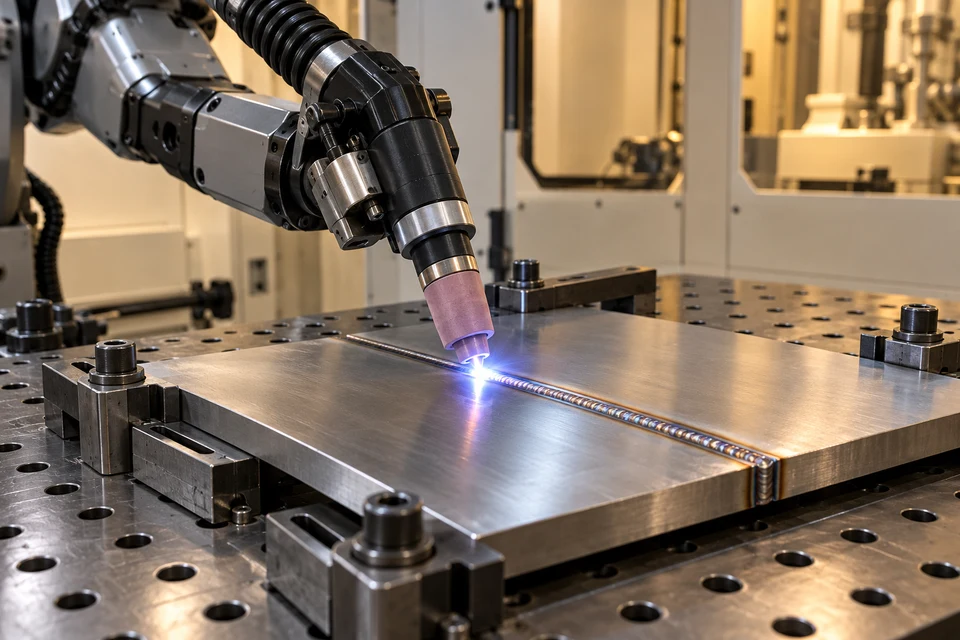
03 / Component assembly
Describe the components, expected joining method and intended use. The visualisation shows a welding example; the joining method remains to be agreed.
Is it clear which parts will be joined and what function the assembly serves?
Material, documentation, scope and parameters need a separate agreement.
Material / information for discussion
In this DEMO, “steel” or “aluminium” is a material group. It specifies neither grade, condition, finish nor suitability for the application.
Concept portfolio / 03 DEMO studies
Three illustrative briefs show how to prepare information. They are neither client projects nor evidence of a factory's capabilities.
01 / Synthetic example · DEMO
A flat part with a described outline and mounting holes.
02 / Synthetic example · DEMO
A three-dimensional bracket joining a sample enclosure to a base.
03 / Synthetic example · DEMO
Several parts forming a sample display unit.
The images are AI process visualisations, not documentation of the projects shown. Numbers in the examples are DEMO data.
All briefs are illustrative. Entered numbers demonstrate the form; they do not represent an offer, tolerances, machine availability or confirmation of production.